Hair Care Guide
Herbal Shampoo for Dry Scalp: A Gentle Moisture-First Wash Routine
Herbal shampoo for dry scalp: why moisture comes first
A scalp that feels dry and tight needs a wash that cleans without stripping, and herbal shampoo for dry scalp works best when moisture comes first in the routine. A dry scalp makes too little oil of its own, and a strong shampoo takes away what little moisture the skin holds. The result is itching, flakes and hair that feels rough at the roots.
The goal of the wash is clean hair with a calm scalp, not a squeaky feeling. When the scalp feels tight after washing, the shampoo was too strong for it. A dry scalp wash routine uses a small amount of shampoo, lukewarm water and a slow, gentle wash, and the scalp stays comfortable through the day. Herbal shampoo for a sensitive scalp follows the same gentle order, with a soft lather and no scrubbing.
How a dry scalp feels and what makes it worse
A dry scalp often feels tight after a wash, and it may itch by the afternoon or show small white flakes on dark clothes. Cold wind, indoor heating and very hot water all pull moisture from the skin, and the scalp dries out faster in winter than in summer. Indoor heating dries the air through the winter months, and the scalp loses moisture faster indoors than it does outside. Washing too often makes the problem worse, since each wash takes more moisture away.
Hard water can add to the dryness, since it leaves a light film on the scalp that blocks moisture. Brushing hard or scratching at an itch only irritates the skin further. A gentle shampoo for dry scalp cleans the film away without scrubbing, and a calm wash leaves the scalp settled instead of sore. A gentle wash routine for a dandruff-prone scalp with herbal shampoo treats flakes with the same slow care, and a dandruff-prone scalp needs its own routine.
A gentle moisture-first wash routine
Wet the hair fully with lukewarm water first, and work a small amount of shampoo between wet hands until a soft lather forms. Spread the lather over the scalp with the fingertips, not the nails, and massage in slow circles so the lather reaches every part of the scalp. Keep the wash slow and gentle, and let the lather sit for a few moments before the rinse.
Wash the lengths with the lather that runs down from the scalp, and do not pile extra shampoo on the ends. The ends are the oldest part of the hair, and they dry out first. A moisture-first hair wash treats the scalp first and the lengths second, and one wash is enough for most days. The hair wash routine after oiling shows how to wash out oil without stripping the hair.
Rinsing well without washing away the moisture
Rinse with lukewarm water until the water runs clear and the hair feels smooth, with no slippery feeling left on the scalp. The slippery feeling is leftover shampoo, and it means the rinse is not done. Let the water run over the scalp and down the lengths, and turn slowly so the rinse reaches both sides evenly. A handheld shower head helps, since it aims the water exactly where the rinse is needed.
Do not finish with very hot water to feel clean, since hot water strips moisture from the scalp in seconds. A final rinse with cool water is optional, and it suits some hair better than others. Rinsing well matters most for a dry scalp, since leftover shampoo dries on the skin and adds to the itching. Herbal shampoo rinse routine explains how to wash out every trace for lighter, fresher hair.
Between washes: keeping a dry scalp calm
A dry scalp stays calmer when washes are spaced out, and two or three washes a week suit most hair in cooler weather. On the days between washes, a light oiling keeps the scalp comfortable, and a soft brush moves the natural oil from the roots down the lengths. A silk or satin pillowcase can help too, since it rubs the hair less than cotton while sleeping, and the scalp stays calmer through the night. Avoid tying wet hair tightly, since wet hair stretches and breaks more easily.
Keep hats and scarves clean, since they sit against the scalp for hours and gather oil and dust. Drink water through the day and keep the diet varied, since the scalp is skin, and skin shows the same care as the rest of the body. A gentle wash for dry scalp works best as part of a calm weekly rhythm, not as a one-day fix. Switching to a herbal shampoo explains what the first few weeks feel like.
Mistakes to avoid
The first mistake is using a large amount of shampoo to force more lather, which only strips the scalp further. The second is washing with very hot water, which dries the scalp before the day even starts. The third is scratching at flakes with the nails, which breaks the skin and leaves it sore.
The fourth mistake is washing every day out of habit, even when the hair is still clean. The fifth is skipping the rinse and leaving shampoo on the scalp, which dries there and adds to the itching. Wash gently, rinse fully, and keep the routine steady. How often should you wash your hair gives a gentle routine for Pakistani weather.
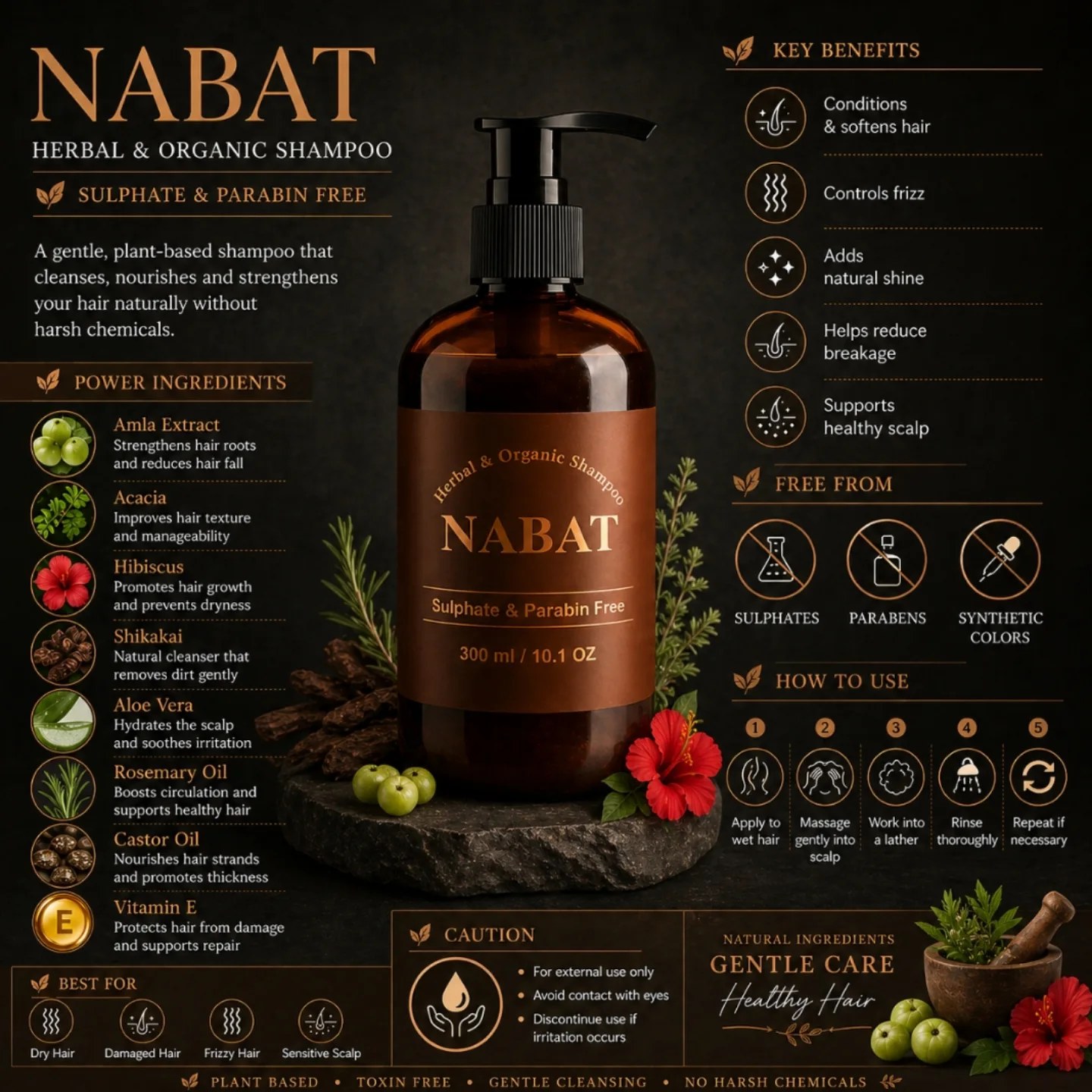
Try Nabat Herbal Shampoo for yourself
Order Nabat Herbal Shampoo through the order form on our website — Cash on Delivery across Pakistan.
Order Now View the Product